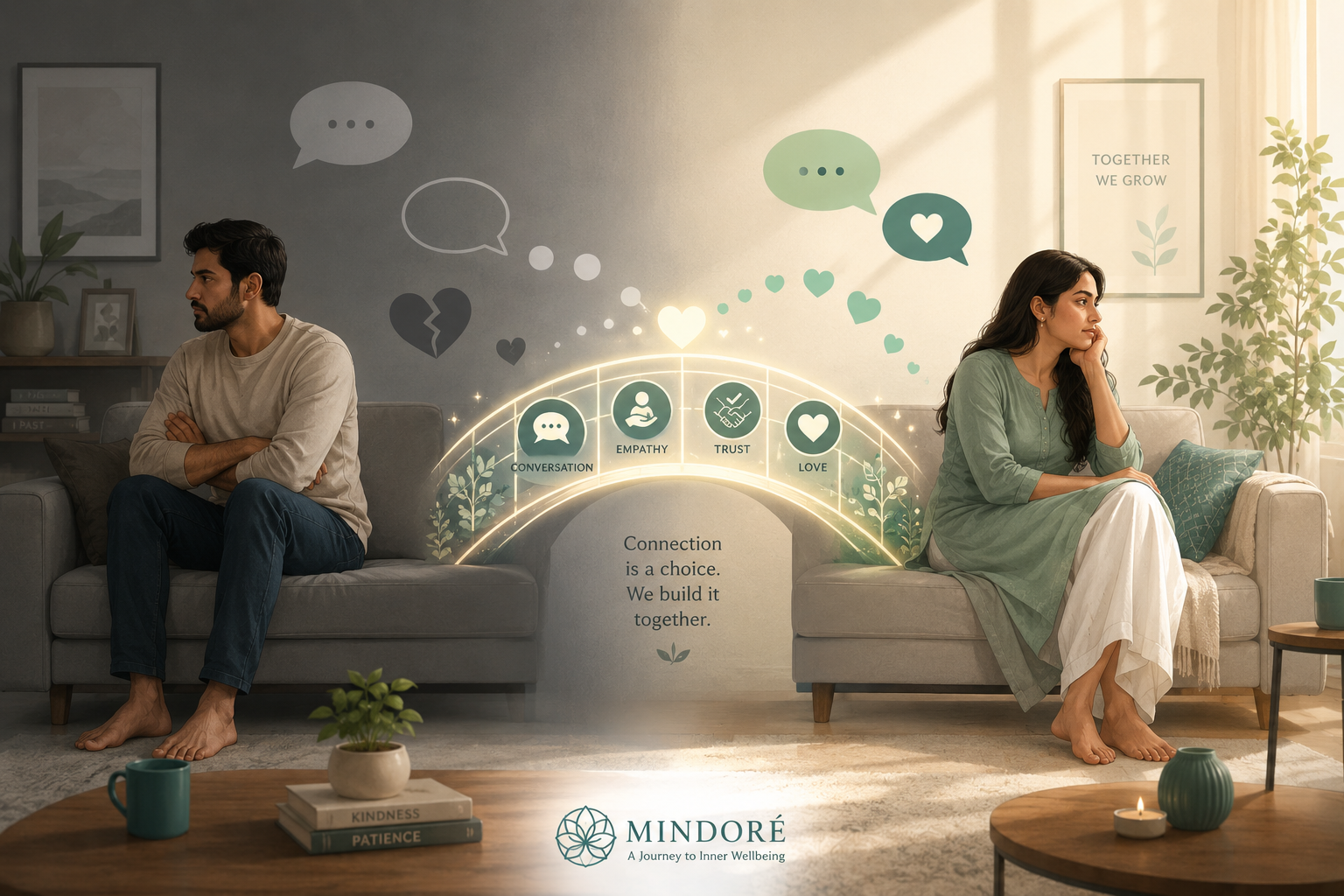
While every relationship is unique, the following signs may indicate growing emotional distance.
1. Conversations Feel Surface-Level#
Discussions revolve mainly around:
Bills
Children
Household chores
Work schedules
Meaningful conversations about feelings, dreams, fears, or personal experiences become rare.
2. Affection Has Decreased#
You notice less:
Hugging
Holding hands
Smiling at each other
Loving words
Physical closeness
Affection may feel like an obligation rather than a genuine expression of care.
3. You Feel Lonely Even Together#
One of the most painful experiences is feeling emotionally alone while sharing the same home. Physical presence no longer creates emotional closeness.
4. Your Partner Rarely Shares Their Feelings#
Instead of discussing emotions, your partner may respond with:
"I'm fine."
"Nothing's wrong."
"It doesn't matter."
Over time, emotional conversations disappear.
5. Conflicts Are Avoided Instead of Resolved#
Rather than working through disagreements, one or both partners may:
Walk away
Stay silent
Change the subject
Suppress feelings
Avoidance can create temporary peace but often increases emotional distance over time.
6. Lack of Curiosity About Each Other#
Partners stop asking questions like:
Without genuine curiosity, emotional intimacy gradually fades.
7. Feeling Like Roommates Instead of Partners#
Responsibilities continue, but emotional partnership feels absent.
Daily routines replace emotional connection.
8. Reduced Empathy#
One partner may seem indifferent when the other is upset, stressed, or excited.
Responses become brief or emotionally unavailable.
9. Spending More Time Apart#
Choosing work, social media, hobbies, or other activities over quality time together may become increasingly common. Occasional independence is healthy, but persistent avoidance of shared time can signal emotional distance.
10. Feeling Emotionally Unsafe#
You hesitate to express your thoughts or feelings because you expect criticism, dismissal, or indifference. Emotional safety is essential for intimacy, and when it feels absent, partners often withdraw further.
11. Emotional or Physical Intimacy Has Declined#
While every couple's relationship is different, a noticeable decline in emotional closeness often affects physical intimacy as well. Holding hands, hugging, kissing, or expressing affection may become less frequent.
It's important to remember that changes in intimacy can also be influenced by factors such as health conditions, medications, stress, pregnancy, or ageing. Emotional detachment is only one possible explanation.
12. Important News Is Shared Last#
Your partner learns about significant events in your life after friends, colleagues, or family members have already heard. This may suggest that emotional sharing and trust have weakened.
13. You Stop Turning to Each Other for Support#
Instead of seeking comfort from your spouse during difficult times, you rely solely on others—or keep your feelings to yourself. Healthy marriages often involve partners who see each other as a source of emotional support.
14. You Feel Unnoticed or Unappreciated#
Small acts of kindness go unacknowledged. Achievements are met with little enthusiasm, and efforts around the home or family may feel invisible.
Over time, feeling consistently unappreciated can contribute to resentment and further emotional withdrawal.
15. Thoughts of Separation Feel Increasingly Common#
You or your partner may begin wondering what life would be like apart—not necessarily because you want to end the marriage, but because the emotional disconnection feels overwhelming.
These thoughts can be a sign that the relationship needs attention rather than proof that it cannot improve.